

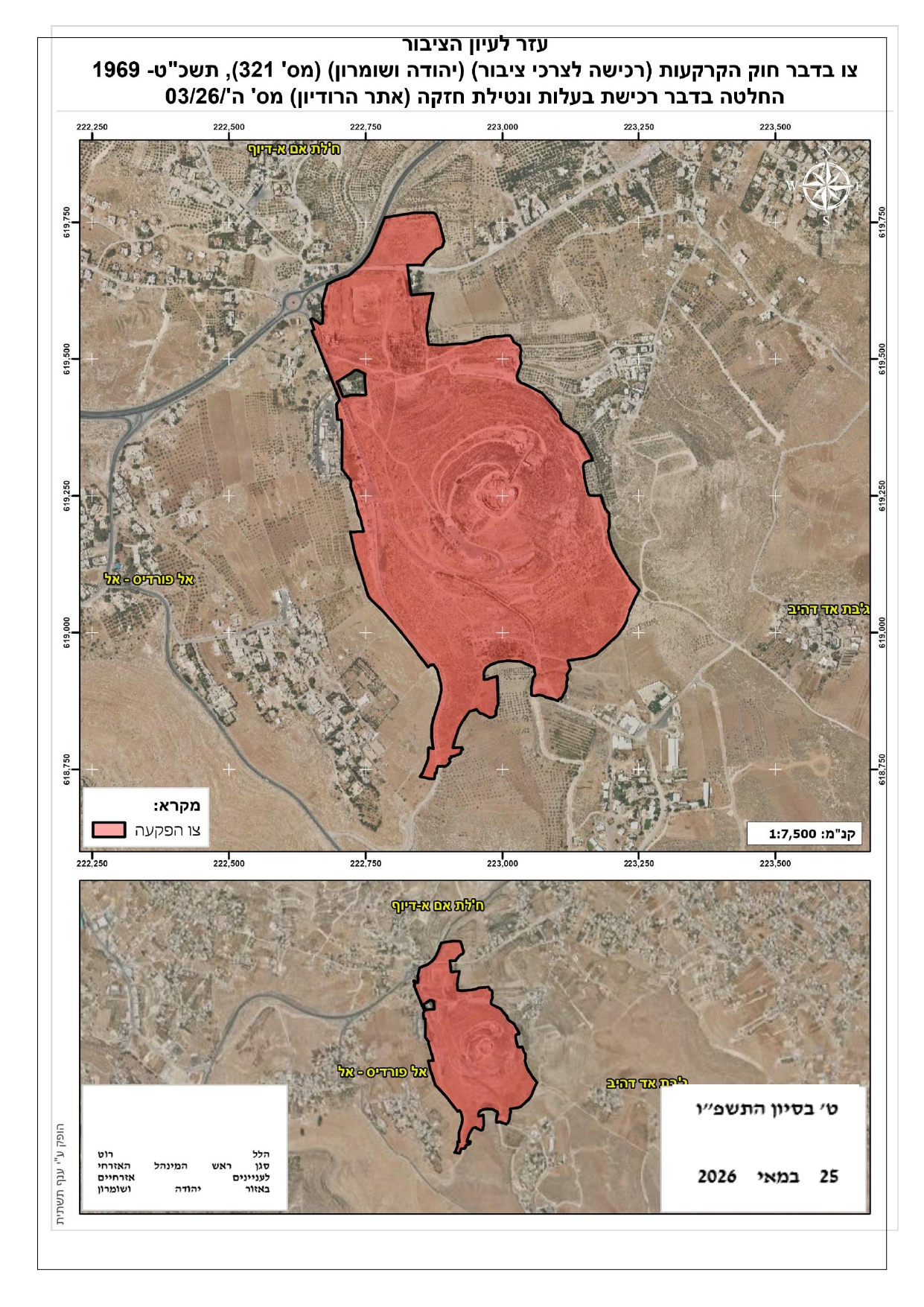
The Israeli Civil Administration has issued an expropriation order (“acquisition for public purposes”) covering the Herodium archaeological site and its surroundings, totaling 300 dunams (Expropriation Order H/03/26). Herodium is located east of Bethlehem, adjacent to the Palestinian villages of Furadis, Za’atara, Jubet al-Dihab, and others. The expropriation includes the hill on which Herodium is situated, the excavation areas at the foot of the site, and surrounding lands, including privately owned agricultural property.
In recent months, the Civil Administration has begun expropriating land at archaeological sites across the West Bank. On 11 February 2026, 2,068 dunams were expropriated for the archaeological site of Sebastia, including surrounding agricultural lands. In May 2026, an additional 110 dunams were expropriated at the archaeological site and religious shrine of Nabi Samuel.
Peace Now:”The government is trying to exploit every moment before the elections to create additional facts on the ground that will advance the full annexation of the West Bank. Tourist and archaeological sites constitute another form of settlement. Their purpose is not only to seize extensive areas of land but also to shape public consciousness, marginalize the Palestinian connection to the land, and transform this country into a land exclusively for Jews, both physically and in terms of heritage. This policy condemns us to many more years of a painful and bloody conflict that can only be resolved through a compromise over this land, which is precious to both Israelis and Palestinians.”
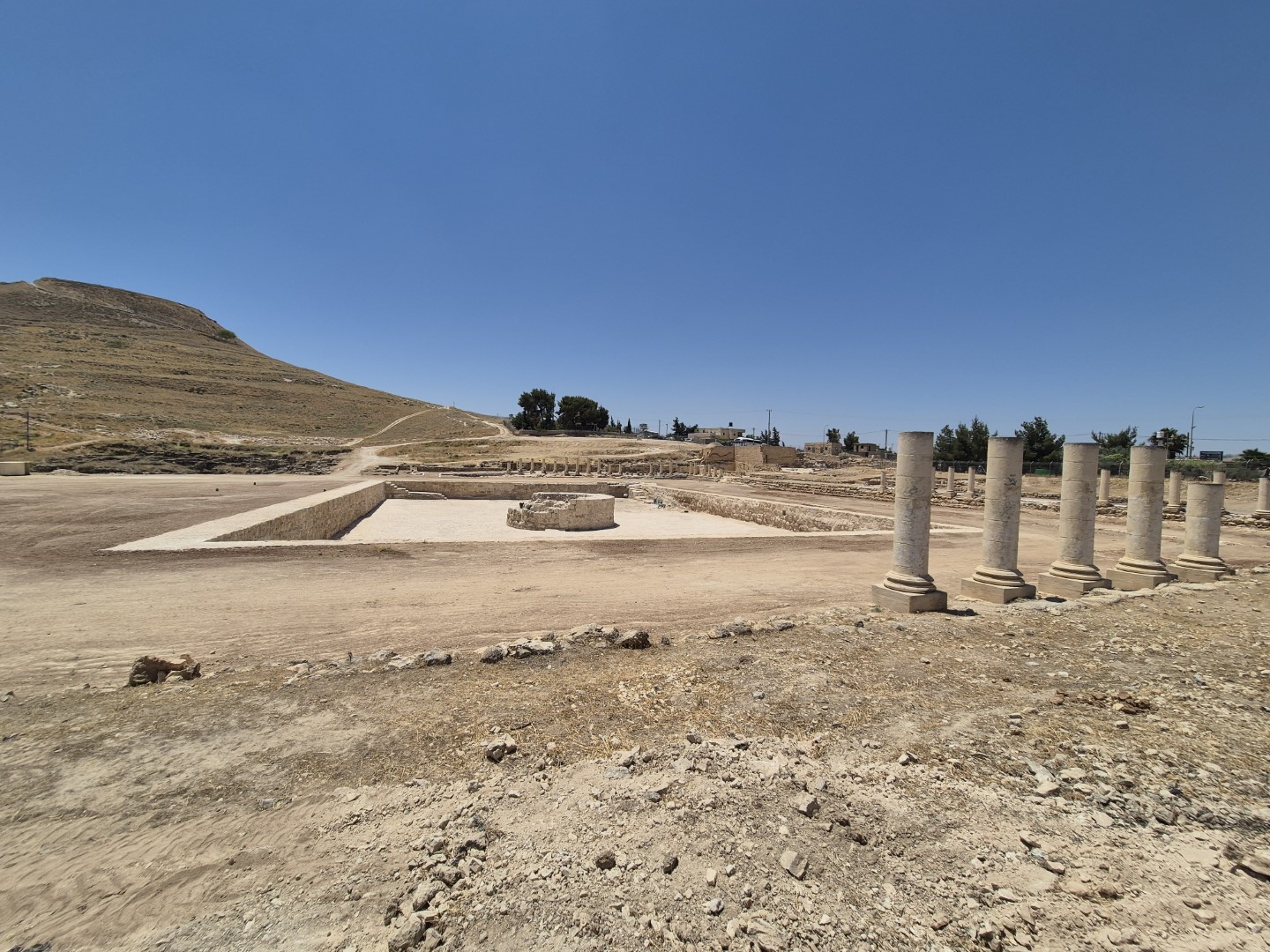
The Lower Pool at Herodium to Be Refilled with Water
The Takeover of the Herodium Site
In March 2024, the Civil Administration declared 170 dunams within the Herodium site as state land. The new expropriation order includes this area, along with an additional 130 dunams, primarily in the lower section of Herodium, where the large Lower Pool from the Herodian period is located.
Last January, Heritage Minister Amichai Eliyahu announced a plan to rehabilitate the Lower Pool at Herodium so that it could once again store water. Following the announcement, extensive development and conservation works were carried out over recent months and have now been completed. The expropriation appears intended to facilitate the development plans outlined by Minister Eliyahu, including the establishment of a new visitor center.
Israel declared Herodium a national park in 1985. The site is identified as a palace and fortress built by King Herod in the first century BCE. At the foot of the hill, in the area known as “Lower Herodium,” archaeologists uncovered a large pool measuring approximately 70 by 46 meters, surrounded by colonnades and gardens. During the First Jewish Revolt against Rome (66–70 CE), groups of Jewish rebels fortified themselves at the site. In the second century CE, Herodium served for a period as a base for fighters in the Bar Kokhba Revolt (132–135 CE). Between the fifth and seventh centuries, the site functioned as a monastery before eventually being abandoned.
In 2007, the Hebrew University of Jerusalem announced the discovery of what was identified as Herod’s tomb at the site. In the years that followed, the Israeli government invested tens of millions of shekels in its development.
Implications of the Expropriation
The legal framework governing the occupied territories permits authorities to expropriate privately owned land for public purposes, subject to compensation for landowners. Under international law, as well as according to rulings of the Israeli Supreme Court, Israel is prohibited from expropriating land for settlement purposes or exclusively for the benefit of Israeli citizens. Consequently, in order for the expropriation to be considered lawful, the state will likely argue that the site is intended to serve both Palestinian and Israeli populations, despite the apparent fact that its primary rationale and purpose are linked to settlement expansion and Israeli control.
Past experience demonstrates that Palestinian landowners rarely seek compensation for expropriated land, as they generally refuse to recognize Israel’s authority to confiscate their property. From their perspective, accepting compensation is akin to consenting to the sale of the land. This has enabled Israel, over the years, to expropriate tens of thousands of dunams, primarily for road infrastructure projects, while paying little or no compensation in practice.