

In recent years, the Israeli government has taken measures to weaken the Palestinian Authority economically, politically, territorially, and in security. The Netanyahu government has actively sought to prevent the resolution of the conflict through a two-state agreement.
From this perspective, a weakened Palestinian Authority lacking broad public support, along with the existence of extremist groups like Hamas, allows Israeli officials to claim that “there is no Palestinian partner” for peace.
The dangerous policy of “managing the conflict” instead of pursuing a negotiated agreement and resolution has contributed to a decline in Israel’s security and to its current diplomatic and international isolation.
This report summarizes the main measures the government took to undermine Palestinian autonomy by stripping the Palestinian Authority of powers and taking action inside Areas A and B.
Key Findings
1. Actions on the Ground
26 outposts have been established in Area B.
Settlers have taken control of at least 100,000 dunams in Areas A and B.
Settlers have expelled at least 19 Palestinian communities or clusters in Area B.
Settlers have taken over dozens of Palestinian structures, including in Area B, expelling Palestinian families.
The government has demolished dozens of Palestinian structures in Area B (in the Agreed Nature Reserve) after assuming enforcement powers in these areas.
2. Administrative Measures
The government confiscates Palestinian garbage trucks inside areas under Palestinian Authority control.
The IDF has issued seizure orders inside Areas A and B for settlement purposes.
The government allocated NIS 113 million for archaeological projects in the West Bank, including in Areas A and B.
The government stripped the Palestinian Authority of planning and construction powers in the heart of Hebron.
Since June 2025, the government has refused to transfer to the Palestinian Authority funds that belong to the Palestinians (clearance revenues), bringing the Palestinian Authority to the brink of collapse.
Peace Now: “The government’s actions in Areas A and B are not isolated events. They are part of a broader policy aimed at weakening the Palestinian Authority. This approach is meant to create chaos, making it easier to expand settlements into cities and villages deep within the West Bank. The Netanyahu government is playing with fire by ignoring international commitments and putting Israel’s security in danger. All of this is being done to gain more territory in the West Bank and block any chance for peace or a solution to the conflict.”
Background – The Interim Agreement and the Division of the West Bank into Areas A, B, and C
In September 1995, Israel and the Palestinians signed the Interim Agreement (Oslo II), which divided the West Bank into Areas A and B (approximately 40% of the West Bank), under Palestinian civilian control, and Area C (approximately 60% of the West Bank), under Israeli control.
This interim agreement was intended to cover the transitional period until a permanent-status agreement, originally scheduled for completion by May 1999. Since no permanent-status agreement has been signed, the interim arrangements remain in effect.
Under the agreement, all civilian powers in Areas A and B, including planning and construction, enforcement, environmental matters, and archaeology, are vested exclusively in the Palestinian Authority.
In Area A, which includes the main Palestinian cities and accounts for approximately 18% of the West Bank, security responsibility also lies with the Palestinian Authority, and the IDF is not permitted to operate there.
However, after severe violence broke out during the Second Intifada around 2001, the IDF also began operating inside Area A as well, carrying out limited raids and arrests, but did not maintain a permanent presence.
“We will bring down the evil authority known as the PA.” (Smotrich, March 22, 2026)
For decades, Israeli governments have acted directly and through support for settlers to reduce and undermine the Palestinian presence in Area C of the West Bank. Since the establishment of the current government, government actions have begun to extend into Areas A and B, which are under Palestinian control. This is reflected in a series of confidential cabinet decisions, earmarked funding, military seizure orders, and the establishment of outposts in Area B.
Government ministers and members of Knesset have made statements and taken action to bring down the Palestinian Authority and erode its powers. Minister Smotrich, for example, who previously stated that “the Palestinian Authority is a burden and Hamas is an asset,” has called on various occasions, while serving as a senior government minister, for the Palestinian Authority to be brought down, and has pursued policies intended to weaken the PA and impair its ability to function.
Members of Knesset and ministers have visited sites and outposts in Area B, and representatives of the Religious Zionism party recently visited Solomon’s Pools, located inside Area A, and declared that it is time to abolish the division into Areas A and B under the Oslo Accords.
Part A: Actions on the Ground
The Establishment of Outposts in Area B and Land Takeover in Areas A and B
Over the past two and a half years, settlers have established at least 26 outposts in Area B. Military and government officials claim that the outposts are being removed—and several enforcement actions have indeed been taken against such outposts in the past. But in practice, they are rebuilt, multiply, establish, and expand. At the end of 2024, Peace Now’s Settlement Watch team documented seven new outposts in Area B. Since then, another 19 outposts have been added in Area B, most of them in recent months.
Groups of teenagers and young men inhabit some of the outposts, while others also include families and children. After an initial tent and sheepfold are established, most outposts begin constructing permanent structures, including pouring concrete and building synagogues; in at least one case, a coffee cart was placed at the site and settlers come to hang out in “the café” in Area B.
The establishment of outposts typically involves building roads, appropriating water sources, and the displacement of Palestinian communities from extensive areas. Similar to other outposts in the West Bank, those in Area B show that a small number of settlers can effectively control large territories and restrict Palestinian access.
For the list of outposts in Area B
Land Takeover in Areas A and B
In addition to the outposts themselves established in areas under Palestinian Authority control, settlers have also forcibly taken control of more than 100,000 dunams in Areas A and B. According to mapping by Kerem Navot, published in the joint report with Peace Now, Annus Mirabilis, settlers from outposts in Areas C and B used violence and threats to drive Palestinians out and now prevent Palestinian access to 100,000 dunams in areas under Palestinian Authority control: 55,000 dunams in Area B, approximately 28,200 dunams in the Area B “Agreed Nature Reserve,” and 15,600 dunams in Area A.
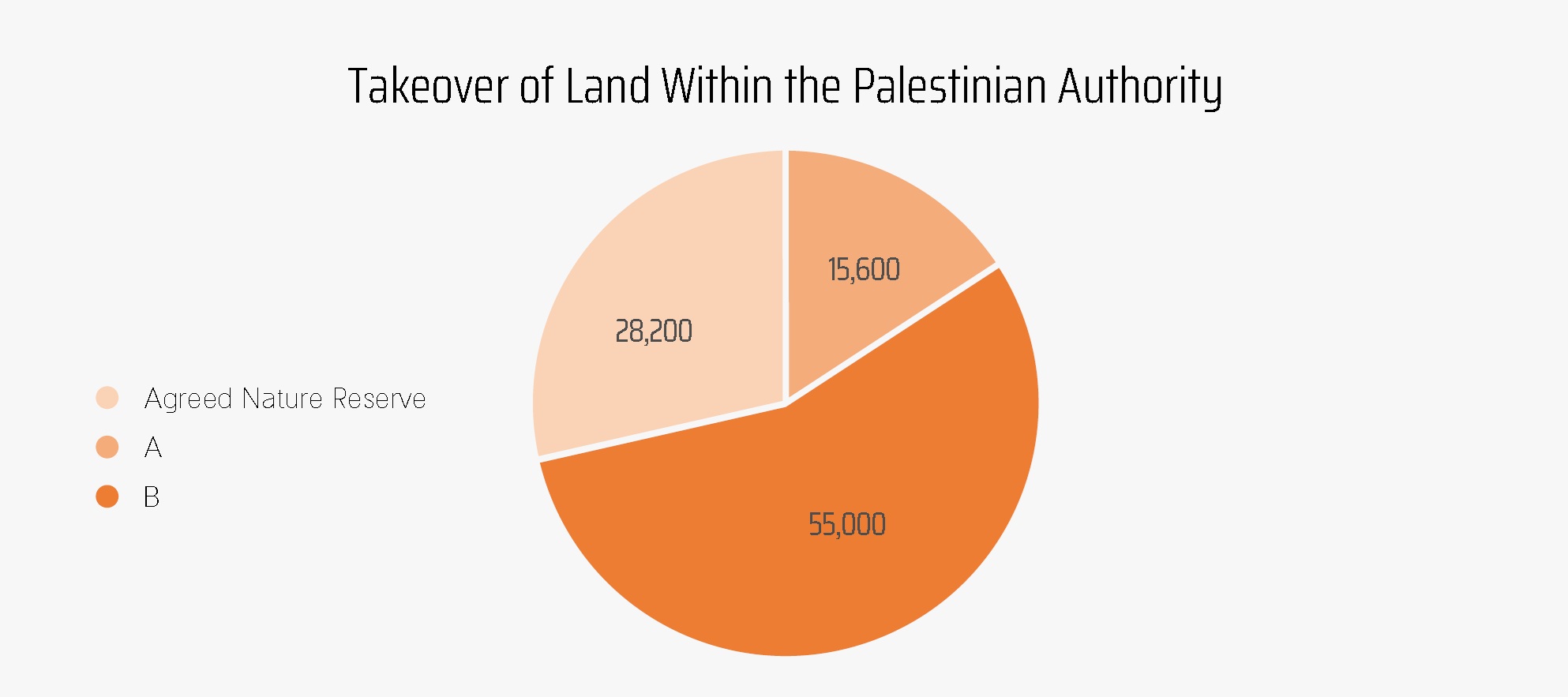
From the report Annus Mirabilis, July 2026
The Expulsion of Palestinian Communities and Takeover of Homes
Settler violence has also led to the expulsion of more than 120 Palestinian communities and clusters, primarily Bedouin or shepherding communities, across the West Bank. Kerem Navot documented at least 19 Palestinian communities and clusters in Area B that were expelled following settler harassment and violence.
In addition to shepherding and Bedouin communities, settlers have also begun taking over homes on the outskirts of Palestinian communities, including in Area B. Peace Now estimates that this involves dozens of homes. Settlers repeatedly attack the residents, threaten them, and at times lay siege to the home, until the families are forced to leave. A recent case involved the Tubasi family from the village of Jalud, which endured prolonged settler harassment until settlers imposed an actual siege and cut off the water and electricity. The family was forced to leave the home, and settlers established an outpost in it.
IDF Expulsion of Approximately 33,000 Refugee Camp Residents and Establishment of a Military Base in Area A
In January 2025, the IDF carried out a large-scale military operation in the Jenin, Tulkarem, and Nur Shams refugee camps. According to UN data, the IDF expelled approximately 33,000 camp residents from their homes, demolished homes in the camps, and prepared roads through the camp streets for the movement of forces.
Yet even after the military and engineering activity, and to this day, for more than one year and eight months, the IDF has prohibited the residents from returning home. They have been forced to find shelter in community centers and schools, rent apartments, or crowd in with relatives. As of August 2026, all remain displaced from their homes.
The IDF has established a permanent military base in Area A near the Jenin refugee camp, marking its first such presence there since the Oslo Accords. Previously, the IDF maintained only watchtowers in Area A.
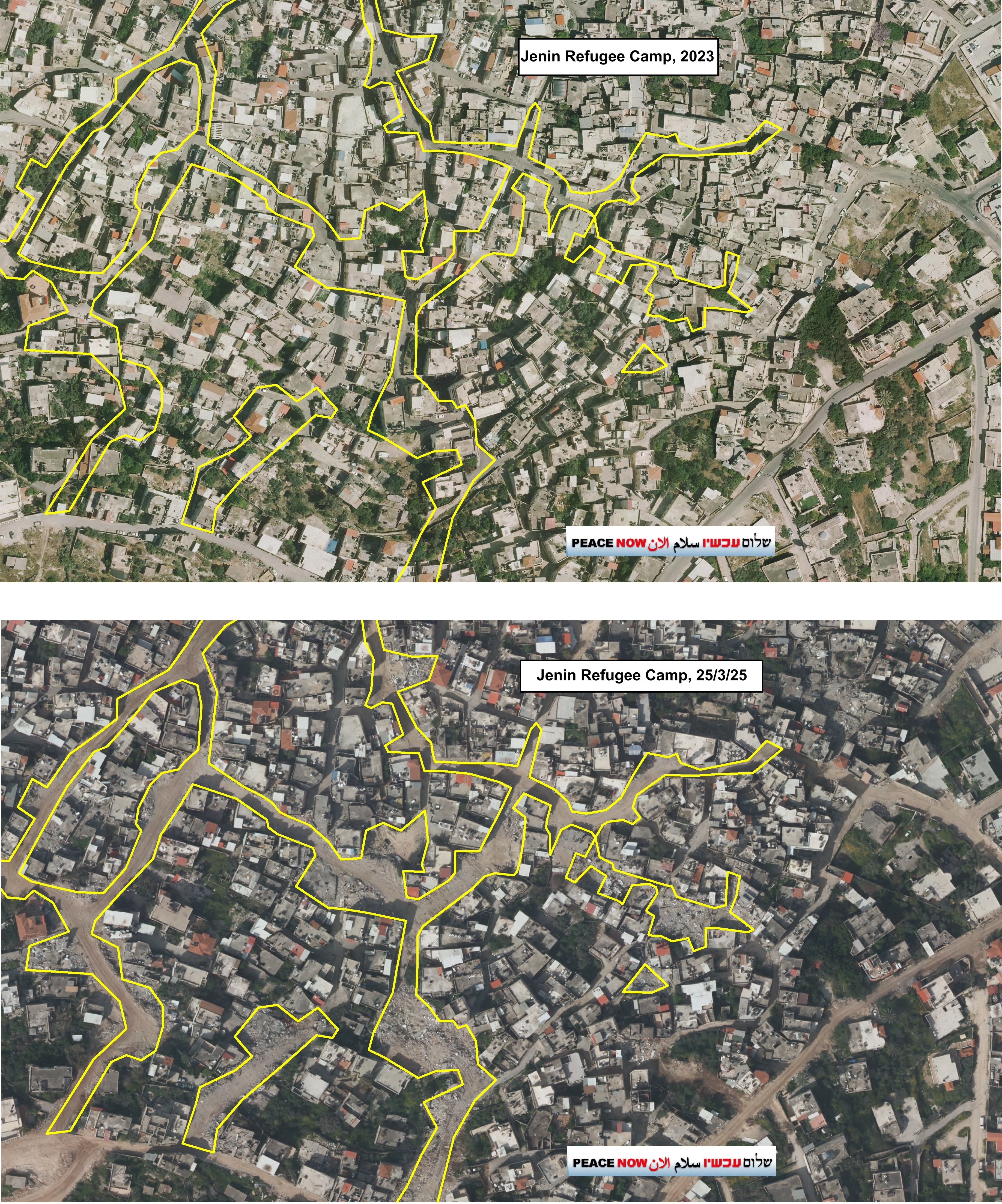
Demolition of homes in the Jenin refugee camp
Military Seizure Orders in Area A for Civilian Purposes
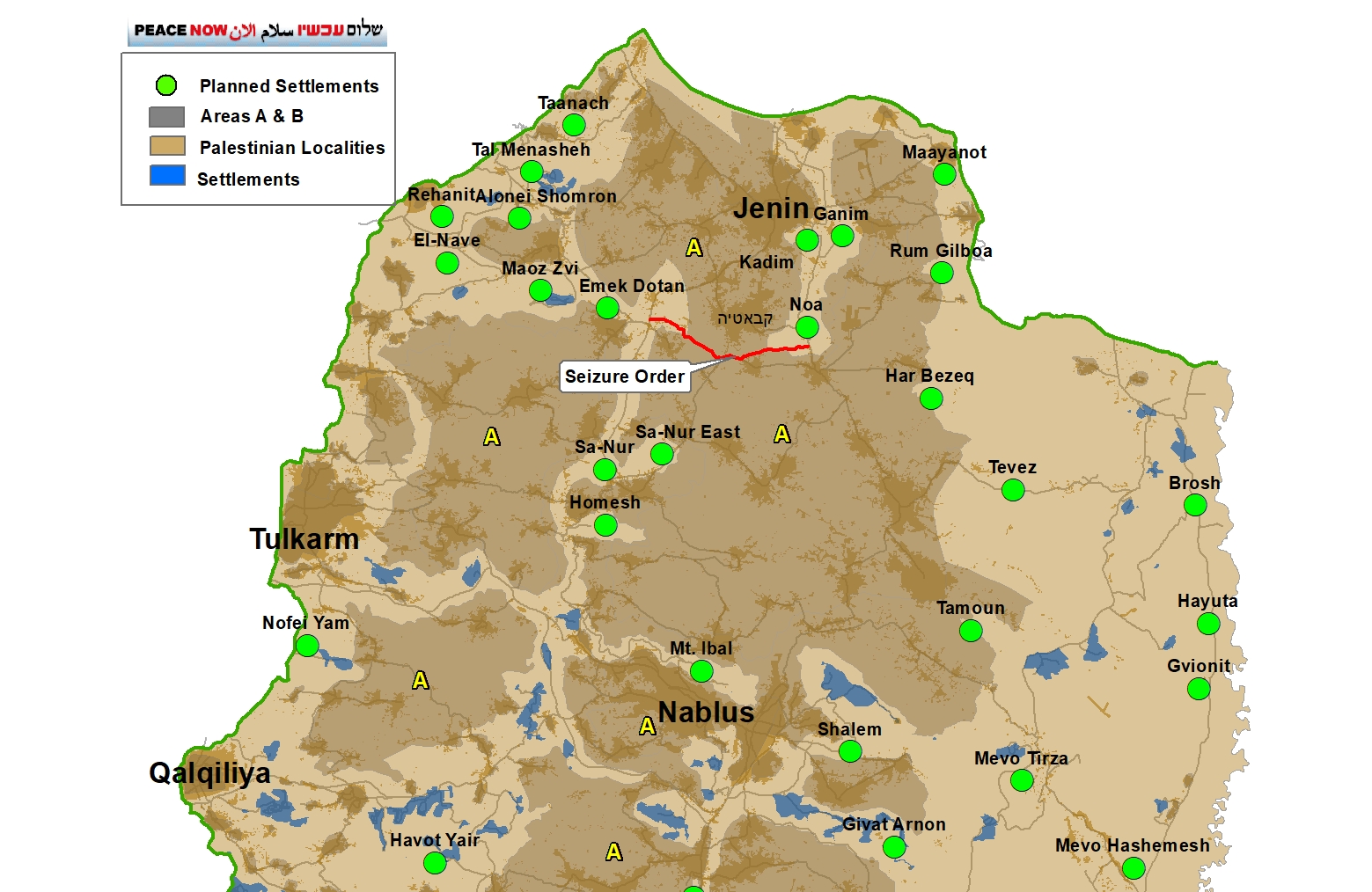
In July 2026, Commander of Central Command Maj. Gen. Avi Bluth signed 15 seizure orders to take control of approximately 200 dunams inside Area A. The orders are intended to create a transportation route between two new settlements: Emek Dotan, which will be established adjacent to the Palestinian town of Arraba, and Noa, north of the Palestinian town of Qabatiya in the northern West Bank. This is the first time since the Oslo Accords that military seizure orders have been used in Area A not for a clear or temporary security need, but for the needs of settlers.
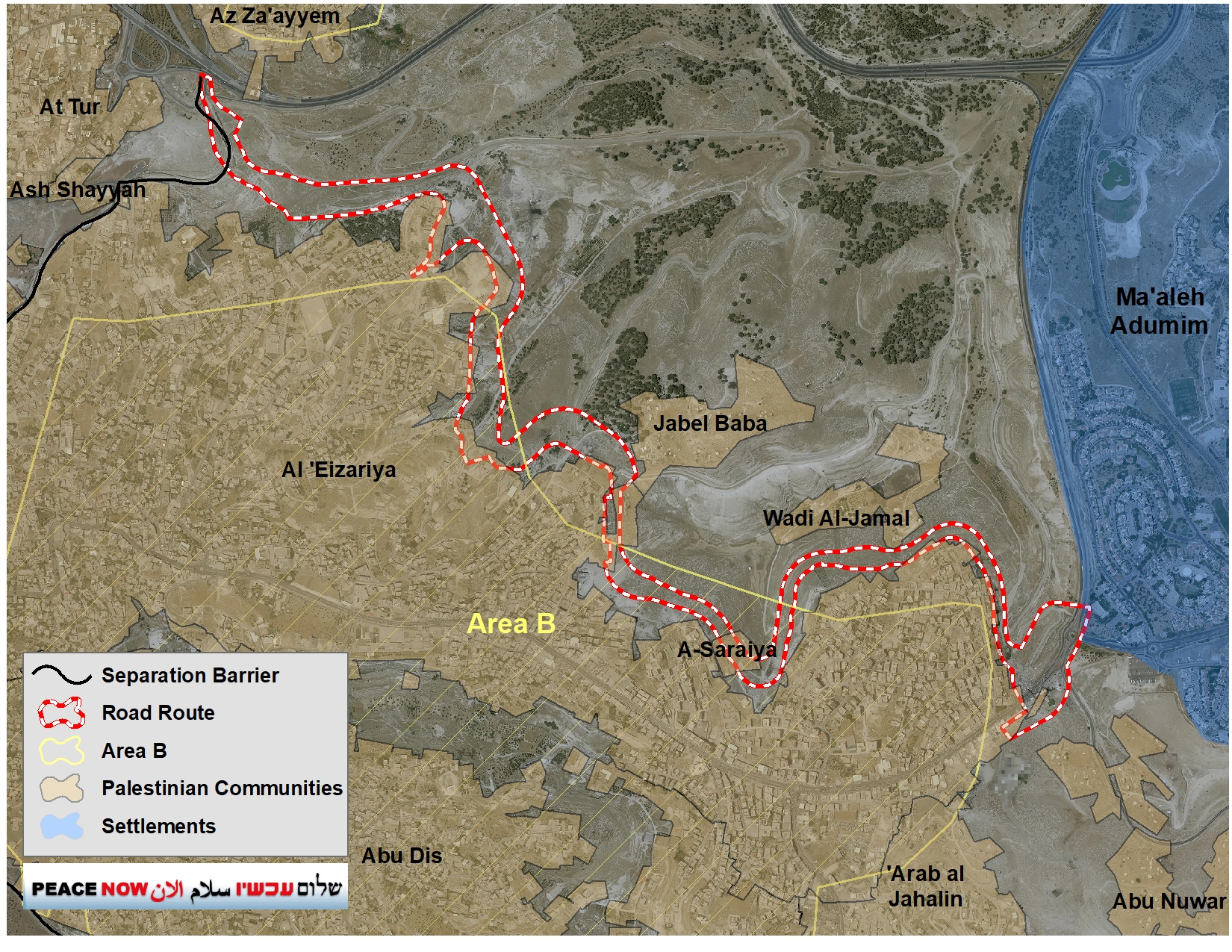
It should also be noted that the Al-Eizariya–A-Za’ayyem Road (also known as the “Sovereignty Road”), construction of which is expected to begin soon, is also being advanced through a military seizure order and partly runs through Area B. The road is intended to enable the closure of the entire Ma’ale Adumim area, approximately 3% of the West Bank, to Palestinians. Residents of the area and landowners filed a petition with the High Court of Justice against the road through attorney Neta Amar-Sheif, and the Court issued an interim order prohibiting work until further notice.
This step follows the Security Cabinet’s decision to establish 104 new settlements, including 19 new settlements in the northern West Bank (following the repeal of the Disengagement Law). The location of some of these settlements requires passage through Area A and violates the agreements between Israel and the Palestinians.
Confiscation of Garbage Trucks in Area B
In recent months, a new phenomenon has emerged: the confiscation of garbage trucks in Area B. There has been a notable increase in cases of Palestinian garbage trucks being confiscated for transporting waste to unauthorized disposal sites within Area B. Reports show that these confiscations occurred in the villages of Beit Furik, Beitillu, Qaryut, Silwad, Salfit, Qusra, Beit ‘Anan, Duma and probably in many more.
Confiscating trucks may prevent waste dumping at specific sites; however, this leaves Palestinian municipalities unable to remove garbage. Consequently, waste accumulates and is burned in other locations, contaminating more land and increasing waste burning.
The waste-disposal problem in the West Bank stems from a shortage of landfill sites, insufficient funding, and the absence of transfer stations where waste moves from small trucks to larger vehicles for landfill transport. The high cost of waste transportation is worsened by checkpoints and road closures imposed by the IDF, which have significantly increased travel times between areas in the West Bank.
Rather than collaborating with the Palestinian Authority to address barriers to effective waste management, the State of Israel relies exclusively on enforcement measures. This approach further complicates efforts to resolve the waste-disposal problem.
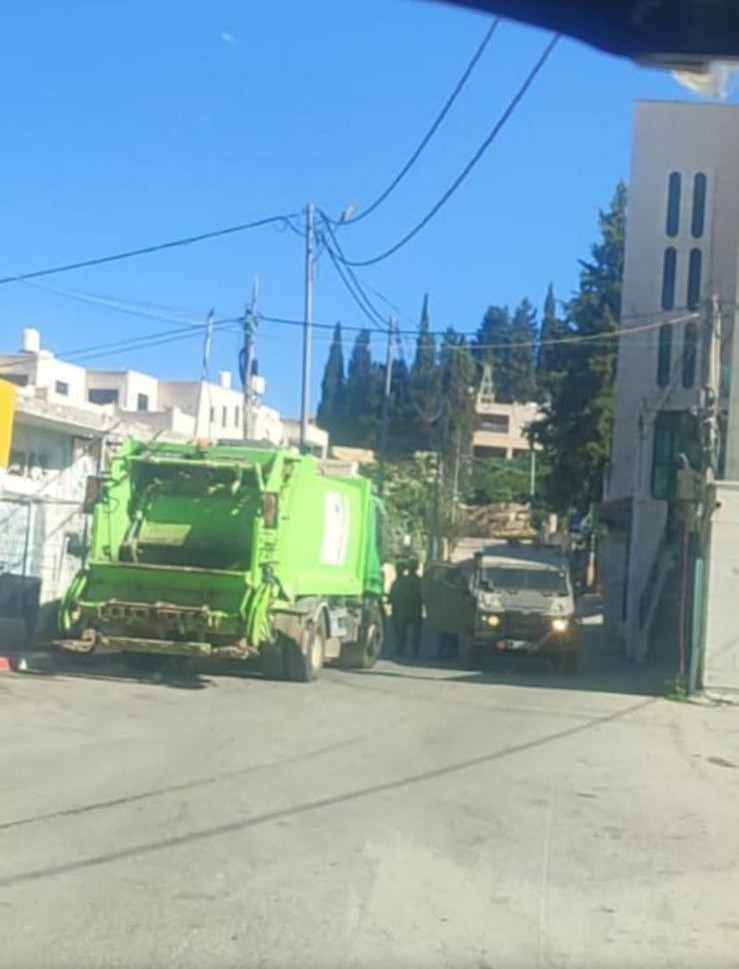
Soldiers confiscate the garbage truck of the town of Beitillu, June 18, 2026
Part B: Administrative Measures
Freezing Clearance Revenues for More Than a Year
One of the ways the government is weakening the Palestinian Authority, and has brought it to the brink of collapse, is by freezing funds that belong to the PA and pass through Israel. The Interim Agreement established, in the Paris Protocol, that during the interim period the State of Israel would continue to control the Palestinian Authority’s border crossings and collect on its behalf taxes on imports, fuel, cigarettes, and other goods. These tax revenues, which amount to approximately NIS 11 billion a year, belong to the Palestinian Authority and over the years have constituted more than 60% of the PA’s budget.
Over the years, Israeli governments deducted part of this amount because of Palestinian Authority debts to Israel for electricity and water, and in recent years funds paid by the Palestinian Authority to the families of prisoners that are in Israeli jail for security offences, were also seized. But since the establishment of the current government, it has also frozen the basic funds and, in the three years through 2025, transferred only about half of the funds belonging to the Palestinian Authority. Since June 2025, it has not transferred a single shekel in clearance revenues.
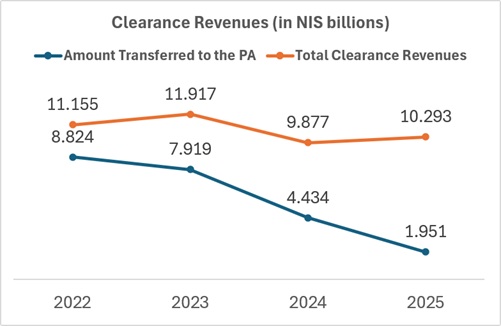
Source: Esteban Klor, INSS, data as of July 2026
It is important to note that the economic situation of Palestinians in the West Bank has deteriorated sharply since October 7, 2023. Hundreds of thousands of workers who worked in Israel and supported close to one million Palestinians in the West Bank have been barred from entering Israel since October 7, 2023. In addition, the freezing of Palestinian Authority funds has led to cuts in the salaries of hundreds of thousands of officials, teachers, doctors, and other employees of Palestinian Authority institutions, who have been receiving only part of their salaries for several years. In addition, settler violence and restrictions imposed by the IDF on access to agricultural land have sharply reduced the ability of thousands of Palestinians to earn a living from agriculture.
Funding Archaeological Activity in Areas A and B
In July 2026, the Knesset Finance Committee approved the transfer of NIS 113 million to the Civil Administration for the development and preservation of archaeological sites in the West Bank. During the discussion, a Civil Administration representative acknowledged that part of the budget is intended for excavations and the development of sites located in Areas A and B, subject to approval by legal counsel. Since the Oslo Accords, the Archaeology Staff Officer has refrained from carrying out archaeological excavations and research in Areas A and B. The decision to excavate in areas under Palestinian Authority control contradicts the Oslo Accords and constitutes a breach of Israel’s commitments to the Palestinians and the international community.
A few days later, Minister Smotrich issued a press release stating that the steering committee established to handle archaeological projects in the West Bank had approved a plan to implement the NIS 113 million allocated to the Civil Administration. The press release included a photograph of Minister Smotrich visiting Solomon’s Pools, in Area A near Bethlehem, with the caption: “Smotrich at Solomon’s Pools, one of the sites that will be renovated under the NIS 113 million budget.”
Enforcement and Oversight in Areas A and B
In February 2026, the Security Cabinet decided (Decision B/228) to allow the Civil Administration to enforce and supervise in Areas A and B on matters related to the environment, water, and archaeology. According to the cabinet, the purpose of the enforcement is to prevent environmental hazards, water violations, and damage to heritage sites.
These definitions allow for very broad interpretation, and it is unclear what will be included under them. Environmental hazards could include garbage dumps and waste-burning sites, polluting factories, or even small businesses or homes that could be deemed environmental hazards if, for example, their sewage is not connected to a wastewater-treatment system. The same applies to water: this may involve water drilling that did not receive approval from the Joint Water Committee, but other water infrastructure involving the transport of water or sewage could also be affected. In the field of heritage and archaeology, the potential harm to Palestinian development and Palestinian property is very substantial. In fact, the entire Land of Israel is full of archaeological sites, especially inhabited areas that in many cases preserve ancient settlements. There is potential for Israeli intervention in Palestinian construction across very large areas.
It should be recalled that about a year and a half ago, the government assumed enforcement powers in parts of Area B defined as the “Agreed Nature Reserve“, leading to the suspension of Palestinian development and construction projects and to demolitions in areas that, under the agreements, are under Palestinian Authority jurisdiction.
Stripping Municipal Powers in Hebron and Bethlehem
In June 2026, the Civil Administration’s Higher Planning Council decided to comprehensively strip the Palestinian Municipality of Hebron of its planning and construction powers regarding the settlements in the heart of the city and several holy sites in the city. Minister Smotrich called the move “the cancellation of the Hebron Agreement.” It constitutes another step in the formal erosion of Israel’s commitments under international agreements, the dismantling of Palestinian governance mechanisms in Hebron, and the application of direct Israeli powers in the heart of one of the largest Palestinian cities in the West Bank. The Higher Planning Council’s decision is based on a Security Cabinet decision (Decision B/229) that Israel would assume planning and construction powers in Hebron and in the area of Rachel’s Tomb in Bethlehem. Until now, the Hebron Municipality had held these powers, and only in exceptional cases—when the government sought to build in Hebron at the Cave of the Patriarchs and a settlement at the old bus station—did it assume planning powers on an ad hoc basis.
This step has broad political significance. Planning and construction powers in Hebron were transferred to the Palestinian Authority under the 1997 Hebron Protocol, signed by Netanyahu and Arafat. The agreement divided Hebron into Area H1, under full Palestinian control, and Area H2, which remained under Israeli security control but under the civilian control of the Hebron Municipality. Despite the Israeli presence in H2, the agreement stipulated that civilian and planning powers remained with the Palestinian Authority. The February 2026 cabinet decision and the June 2026 Higher Planning Council decision effectively cancel this arrangement with regard to the settlements and holy sites in Hebron and transfer planning and construction powers over them to Israeli planning institutions.
Establishment of a Directorate for Rachel’s Tomb: Alongside the stripping of powers in Hebron, the cabinet also decided to establish a directorate to manage the Rachel’s Tomb site, located in Bethlehem. The new directorate will allow the government to transfer funds for the development of the site and the yeshiva operating next to it.
Summary
The steps the Israeli government is taking in Area A are a direct continuation of the government’s actions in Area C, which include the decision to establish 104 new settlements, the establishment of hundreds of outposts, and the large-scale takeover of Palestinian land, homes, and areas. The process, which intensified considerably during the years of the current Netanyahu government since January 2023, began extending into Area B in 2024 and, over the past year, into Area A.
By the end of the current government’s term, it can be said that the process of de facto annexation that began in Area C is now being carried out similarly in Area A. While the government does not declare the cancellation of the Oslo Accords and does not formally declare annexation, in practice, on the ground, it is nullifying the agreement and carrying out annexation by weakening the Palestinian Authority, stripping it of powers, building infrastructure, and establishing outposts in areas that are supposed to be under Palestinian control.