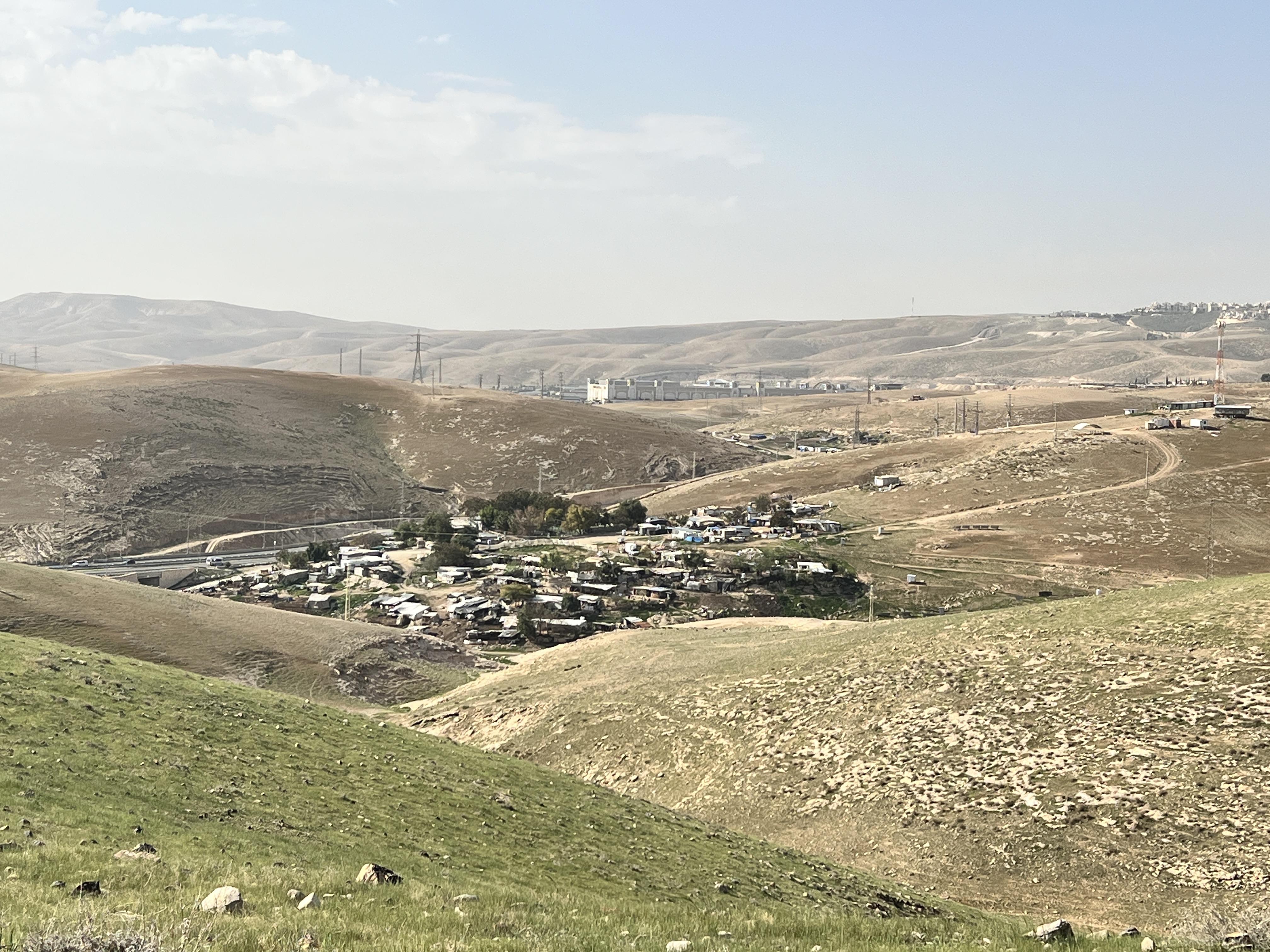
Minister Bezalel Smotrich today instructed the Civil Administration’s Deputy Head of Civil Affairs to begin proceedings for the evacuation of the Palestinian community of Khan al-Ahmar, located east of Jerusalem in the heart of the West Bank. The residents of Khan al-Ahmar are Palestinians who were displaced from areas inside Israel in 1948 and settled east of Jerusalem during the 1960s, when the area was under Jordanian rule. Since the occupation of the West Bank in 1967, Israeli governments have refused to recognize the community of Khan al-Ahmar or issue building permits for it, and demolition orders have consequently been issued against all of its structures on the grounds of lacking permits. In recent years, successive Israeli governments refrained from implementing the demolition orders due to international pressure. Following Smotrich’s directive, however, the demolition of homes in Khan al-Ahmar could take place within the coming weeks.
Peace Now: “Minister Smotrich seeks to take revenge on The Hague and the international community at the expense of one of the most vulnerable communities, which for years has struggled simply for the right to live on the small piece of land in its possession. The expulsion of Khan al-Ahmar is part of a broader government plan to take control of the entire central West Bank area, build in E1, and remove all Palestinian communities from the region. This is a cynical and destructive plan that could devastate the prospects for future peace and a resolution of the conflict, as part of Smotrich and his allies’ annexation agenda.”
The Purpose of the Demolition: Advancing Construction in E1 and Preventing the Possibility of a Two-State Solution
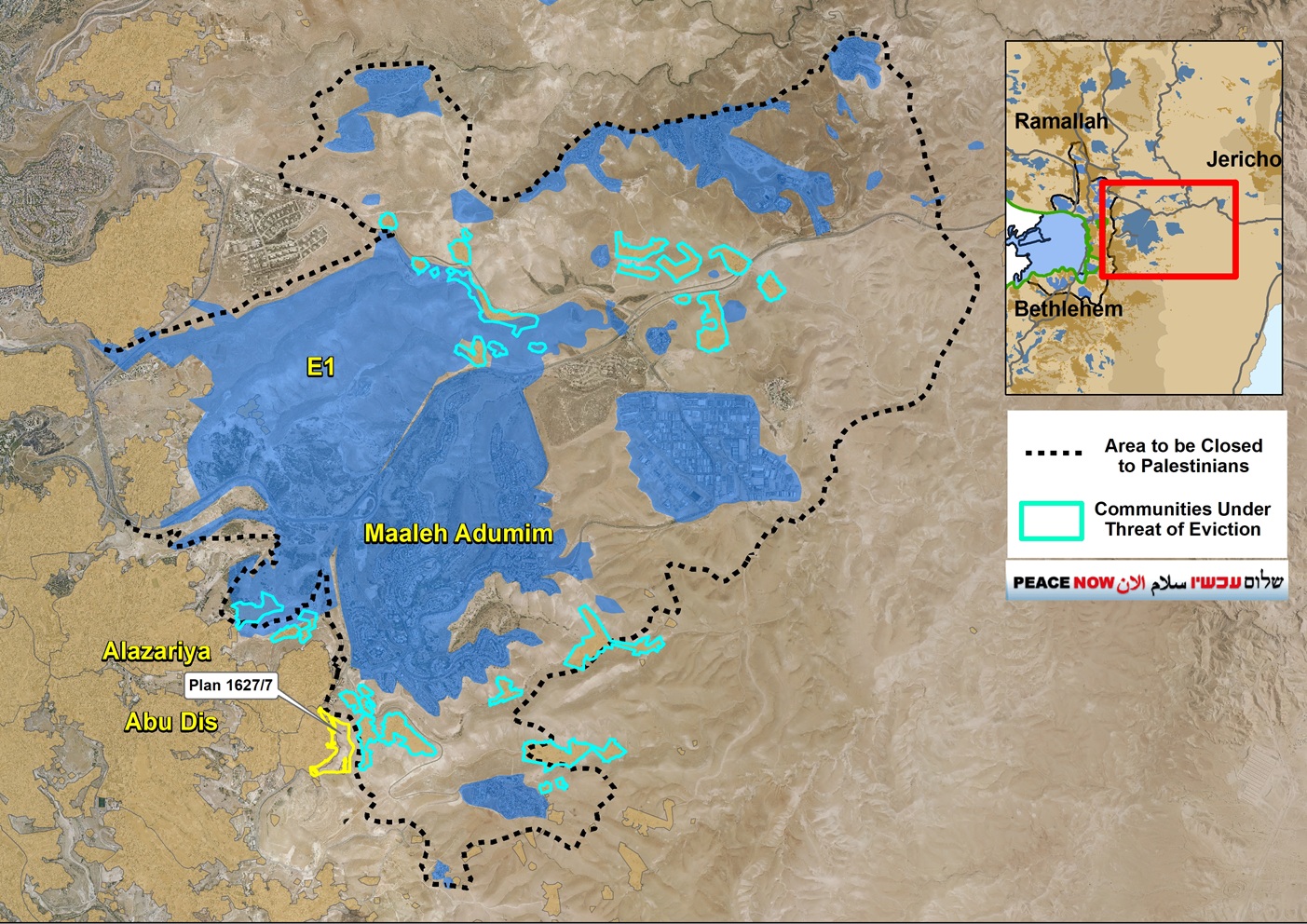
Over the past year, the Israeli government has accelerated efforts to advance a new settlement in the E1 area comprising 3,401 housing units, while simultaneously seeking to take control of an area estimated at approximately 3% of the West Bank and displace the Palestinian communities living there. The E1 plan is widely regarded as a fatal blow to the possibility of a peace agreement and a viable Palestinian state, as it would bisect the West Bank and prevent Palestinian urban development in the metropolitan heart of the West Bank around East Jerusalem.
Last August, the construction plan for the 3,401 housing units was approved. Immediately afterward, three petitions were submitted to the District Court demanding the cancellation of the approval on planning grounds. A hearing on the petitions has been scheduled for June 15, 2026. However, despite the fact that no judicial decision has yet been issued, the government moved quickly to publish a tender for the construction of all the planned units in E1. The tender is expected to open for bids on June 1, 2026, and close on July 6, 2026.
As part of the effort to establish the settlement and effectively annex the area to Israel, the government is also advancing the construction of a new road, previously referred to by Naftali Bennett as the “Sovereignty Road”, that would divert all Palestinian traffic away from the area and enable the closure of approximately 3% of the West Bank to Palestinians. In preparation for the construction of the road, the Civil Administration demolished dozens of Palestinian shops and businesses last week at the entrance to al-Eizariya.
The implications of this move are far-reaching: Palestinian Bedouin communities living in the central West Bank area east of Jerusalem, including Khan al-Ahmar and others, would no longer be able to access their homes and would effectively be forcibly displaced from their communities.
Background to the Decision to Demolish Khan al-Ahmar
Approximately 15 years ago, while active in the Regavim movement, which was subjected to European sanctions last week, Bezalel Smotrich led a public and legal campaign to demolish the homes of the Khan al-Ahmar community. Regavim submitted a petition to the Israeli High Court of Justice demanding the enforcement of demolition orders issued against the structures in Khan al-Ahmar. The Court required assurances that the residents would be provided with alternative housing, and after Israel declared that it had prepared building plots for them near the Abu Dis landfill site, the Court approved the demolition of the structures.
Due to the far-reaching humanitarian and political consequences of demolishing Khan al-Ahmar, Israel came under intense international pressure to refrain from carrying out the demolition. Smotrich has now decided to use the powers granted to him by the government, including authority over demolition enforcement priorities concerning Israelis and Palestinians in Area C, to order the demolition of Khan al-Ahmar.
Because the demolition orders are old, the Civil Administration is expected, prior to any demolition, to deliver notices to residents informing them of the intention to enforce the orders and to grant them several days, usually around two weeks, to submit objections. Such objections are generally rejected and the demolitions carried out, except in cases where residents petition the courts and the court decides to freeze the demolitions pending judicial review. In some cases, however, the court approves the demolitions and declines to issue an injunction preventing them.
If notices of intent to enforce the demolition orders are indeed delivered, the residents of Khan al-Ahmar are expected to petition the courts in an attempt to halt or delay the demolitions. However, the court may still authorize the demolitions, meaning that the destruction of Khan al-Ahmar could take place within as little as two weeks.