

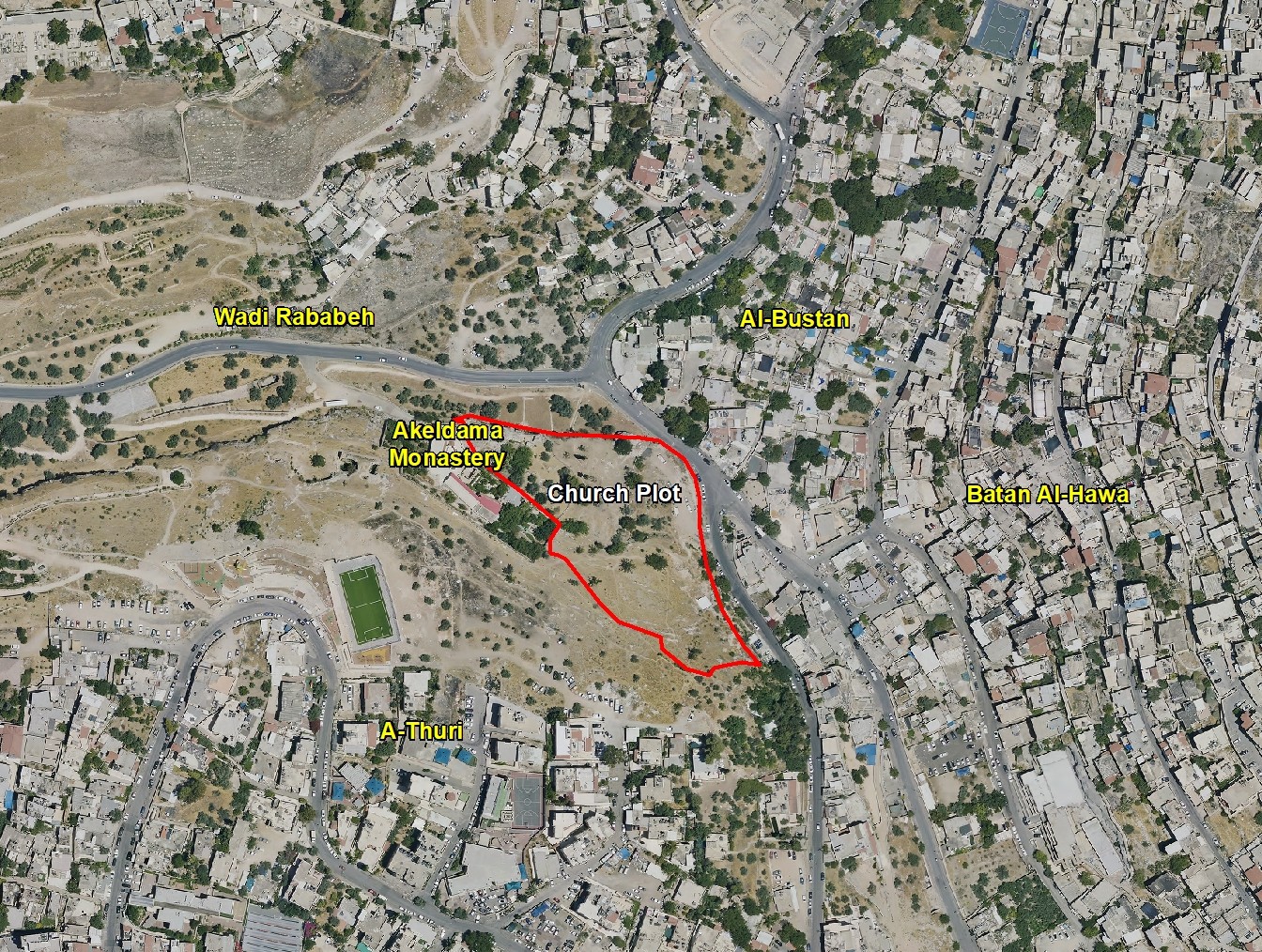
On Monday, June 15, 2026, Jerusalem Municipality staff, supported by police and heavy machinery, entered land owned by the Greek Orthodox Patriarchate in Silwan. They removed equipment and structures, destroyed crops, and installed a fence. Work continued in the following days. The municipality cited “gardening orders” that allow it to take control of land for landscaping. In a statement published online, the Greek Orthodox Patriarchate said:
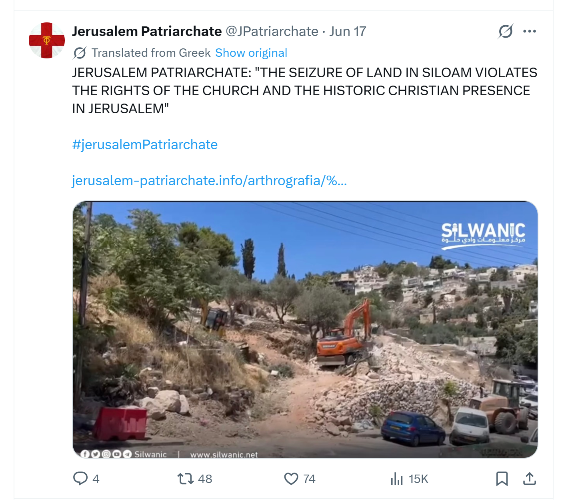
Peace Now:“Jerusalem is a city of profound importance to three religions and to billions of people around the world. The State of Israel should serve as a model of governance that respects all faiths and affords dignity to all of Jerusalem’s residents. Instead, in recent years, Israeli authorities have increasingly pushed the city’s non-Jewish presence aside, not only Palestinians, but also Christians.The takeover of Church land in Silwan is part of a broader effort, led by settler organizations, to gain control over the entire Wadi Rababa and Silwan area and transform it from a Palestinian space into an Israeli one. The Jerusalem Municipality and the Israel Nature and Parks Authority have become instruments of the settler ideological agenda.”
During the hearing, the Secretary General of the Greek Orthodox Patriarchate, Bishop Aristarchos, testified:
“We were surprised by the municipality’s conduct. It did not notify us in advance or attempt to engage with us. We are interested in reaching an understanding with the municipality in a way that does not harm us or the municipality’s plans.”
In response, Bishop Aristarchos said:
“I am astonished by the municipality’s position. Everyone knows this is Church land, and it is important to us for religious and archaeological reasons. In the past, we cooperated with the municipality. In the 1970s, we carried out archaeological excavations on the site in full coordination with the municipality.”
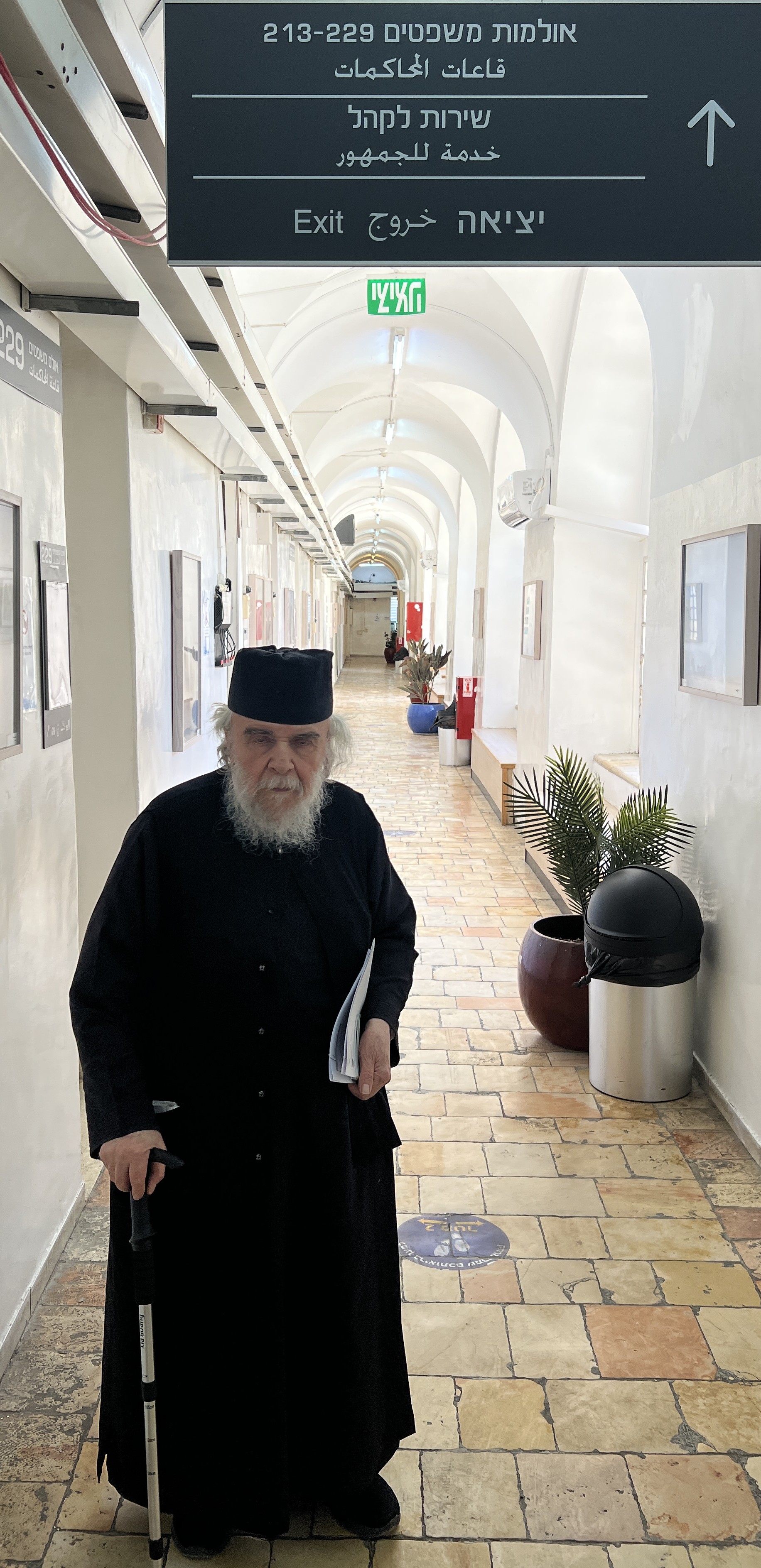
Bishop Aristarchos at the Court, June 18, 2026
A representative of the Israel Nature and Parks Authority explained that the municipality’s actions were essential to protecting the land and its antiquities from encroachment and damage. He added that, in order to protect the land,
“I need to have my foot on the ground and take care of the site. Every day.”