

In recent weeks, the Commander of the Central Command signed olive harvest orders for the 2026 season, barring Palestinians from entering approximately 88,300 dunams (around 21,800 acres) of land unless they secure advance coordination with the military. This marks a roughly 30 percent increase compared to 2025, when the area requiring military coordination stood at 69,000 dunams. Conversely, the land from which the IDF barred Israeli citizens in order to prevent violence and disruptions by settlers decreased from about 10,700 dunams in 2025 to 6,890 dunams in 2026.
Peace Now: “The harvest orders tell the story of the government’s criminal policy: settlers are illegally seizing more and more hilltops with government encouragement and support, while the military, for its part, closes off vast areas to Palestinians under the pretext of defending those illegal outposts. This is a system of dispossession and plunder, and it is a disgrace to the State of Israel.”
According to data from the Palestinian Ministry of Agriculture, the West Bank holds roughly 550,000 dunams (around 136,000 acres) of olive groves, containing about 11 million fruit-bearing trees. This year’s yield is projected to supply oil and olives valued by the Israeli Civil Administration at 735 million shekels (approximately $240 million). The 2026 harvest orders restrict access to nearly 20 percent of the West Bank’s olive-growing regions.
Last year, as in previous years, military coordination was granted very late in the season—after portions of the crop had already rotted or been stolen by settlers—and for brief windows of just one or two days, which prevented farmers from completing their harvest. In practice, the coordination requirement has effectively evolved into a mechanism preventing Palestinians from accessing their ancestral lands.
In recent years, the olive harvest has become a flashpoint for daily settler violence against Palestinians, involving crop theft, arson, and the cutting down of trees. Even now, ahead of the official opening of the harvest season, incidents of theft, physical assaults, and denial of access by settlers and the military have already been documented.
This unfolds alongside policies enacted by the Netanyahu government to withhold Palestinian Authority funds and suspend Israeli work permits, actions that have pushed the Palestinian economy to the brink of collapse and plunged residents into severe economic distress. Consequently, the olive harvest has become a critical lifeline of income for hundreds of thousands of Palestinians.
Furthermore, over the past two years, the IDF has issued land-clearing orders targeting thousands of dunams of olive groves, uprooting trees under the justification of security protocols. Settlers have also destroyed or used bulldozers to uproot thousands of olive trees. According to the United Nations Office for the Coordination of Humanitarian Affairs (OCHA), approximately 88,000 trees and saplings were vandalized by settlers between January 2023 and August 2026.
In addition, increasing number of landowners reported instances where the IDF and settlers prevented them from reaching their fields even in areas where no legal military closures or orders were actively in place.
Expansion of Zones Requiring Military Coordination
A comparative analysis of the 2026 olive harvest orders maps against those published by the Civil Administration for 2025 reveals a sharp expansion. While the IDF required coordination for 68,800 dunams of land last year, that requirement has risen to 88,300 dunams this year (demarcated in red on the official command map).
Legally, this means the land is entirely closed to Palestinians unless authorized by the military. Those entering their fields without prior coordination are committing a criminal offence and face potential removal or arrest.
All restricted harvest zones fall within Area C, the 60% of the West Bank over which Israel retains full civil and military control under the Oslo interim accords.
Roughly 8,130 dunams of the newly restricted areas are located in the Jenin district, where the Israeli government has established 12 new outposts over the past year. For example, near the outposts of Ganim and Kadim, east of Jenin, a harvest restriction was imposed on approximately 690 dunams. Near the Noa outpost southeast of Jenin, restricted zones were of additional 1,260 dunams.
Additional closures have been concentrated near primary roads and newly erected outposts, with several olive harvest restriction boundaries now reaching the immediate perimeters of Palestinian residential villages.
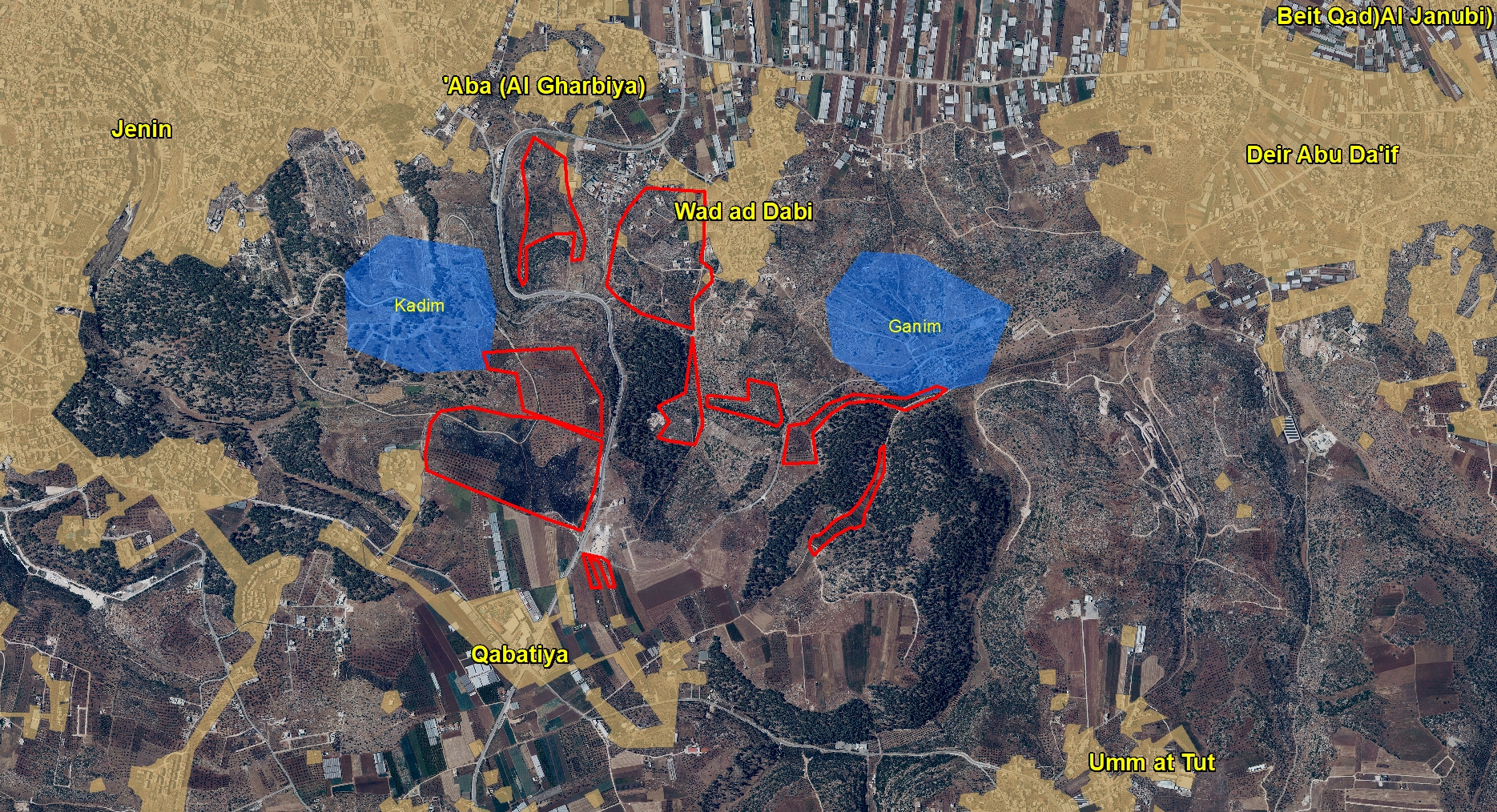
Harvest order restricting some 690 dunams near Ganim and Kadim East of Jenin
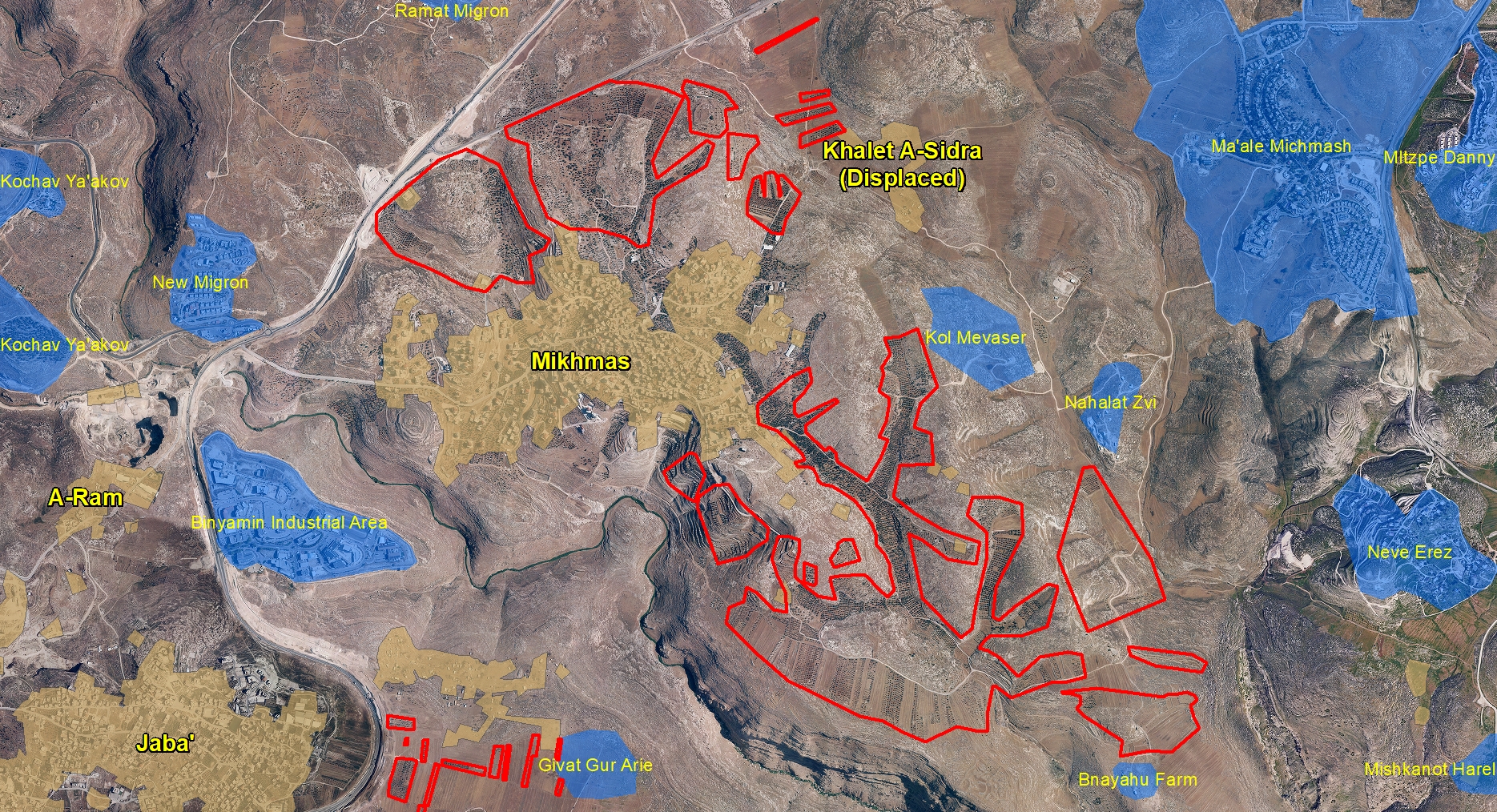
Harvest orders near the village of Mikhmas east of Ramallah. The village was surrounded by violent outposts.
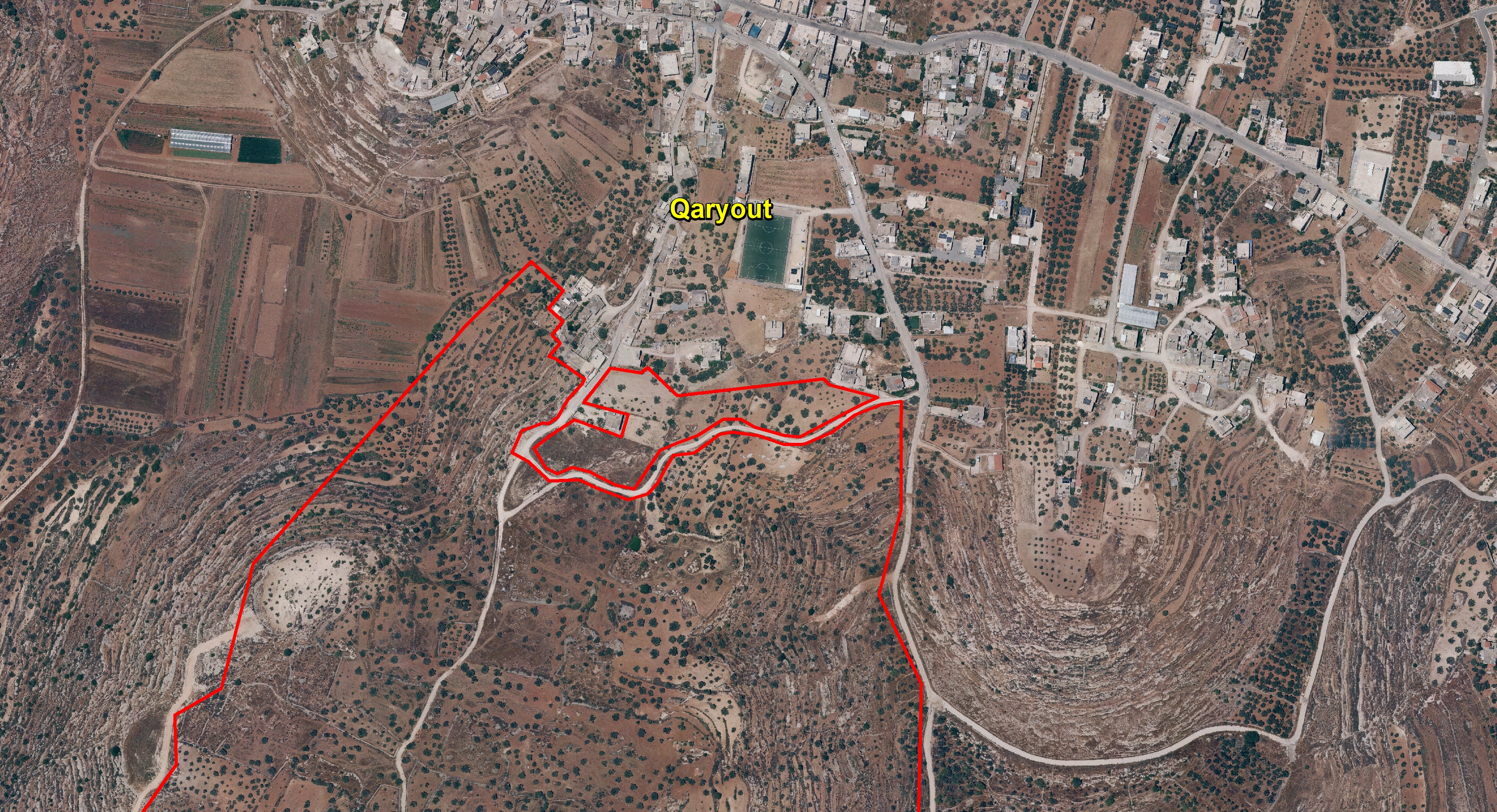
Harvest order near the houses of Qaryout, south of Nablus. Settlers established 3 new outposts 800-1000 meters south of the village
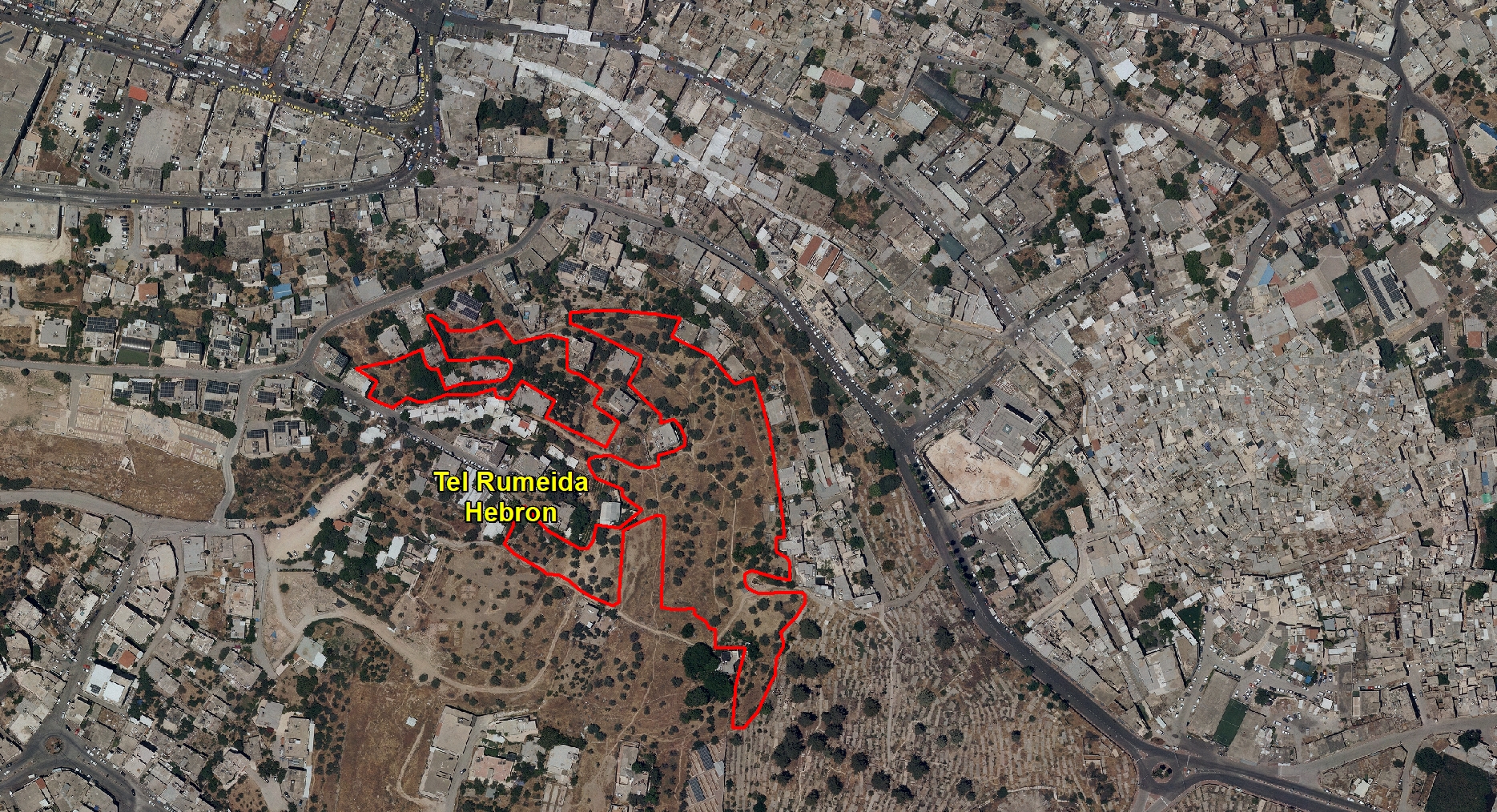
Harvast order restricting 230 dunams between the houses of Tel Rumeida in Hebron
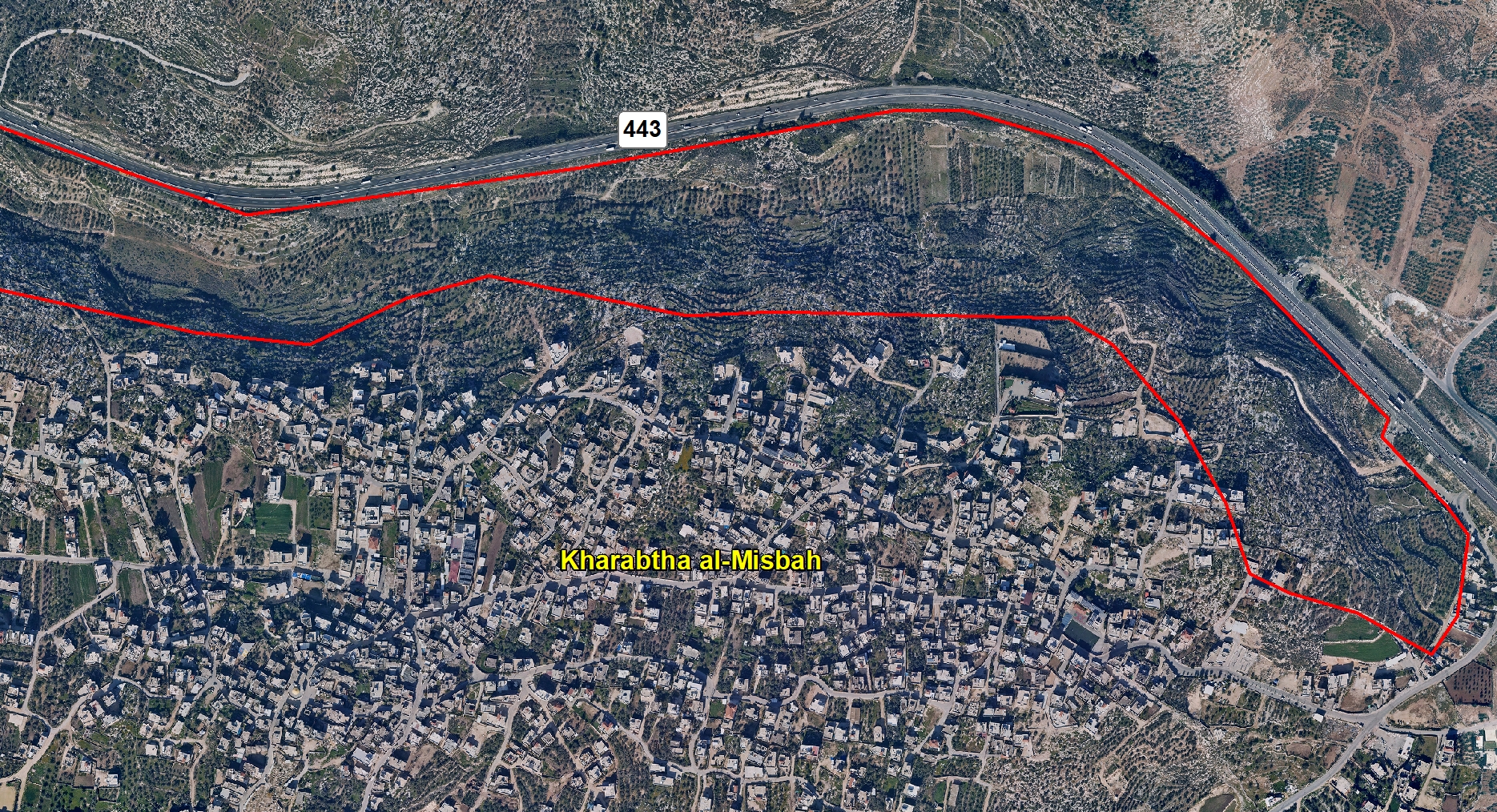
New harvest order restricting 800 dunams of the village of Kharbatha al-Masbah, south of 443 road.
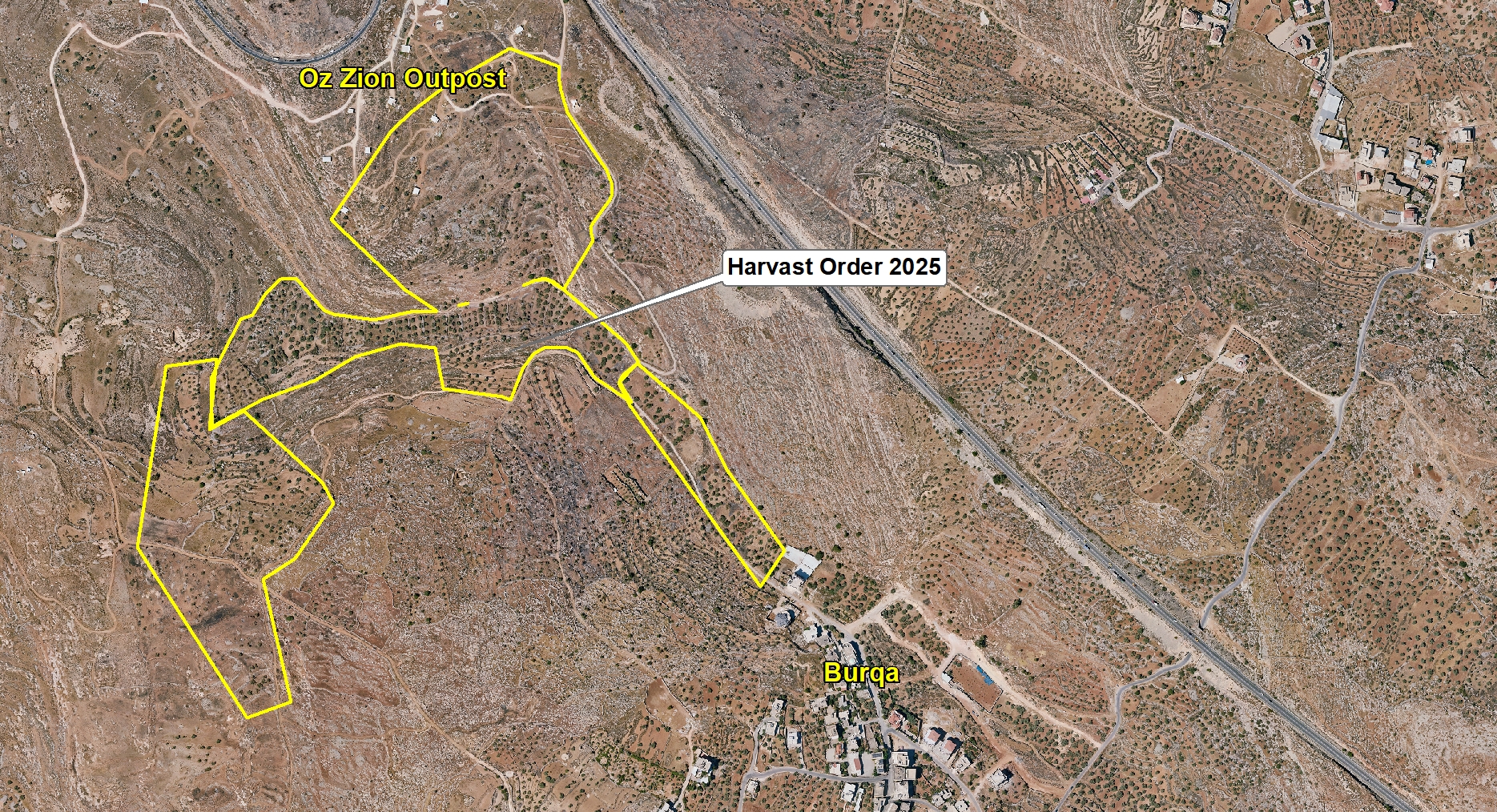
Harvest order from 2025 near the outpost of Oz Zion on the lands of Bourqa, East of Ramallah
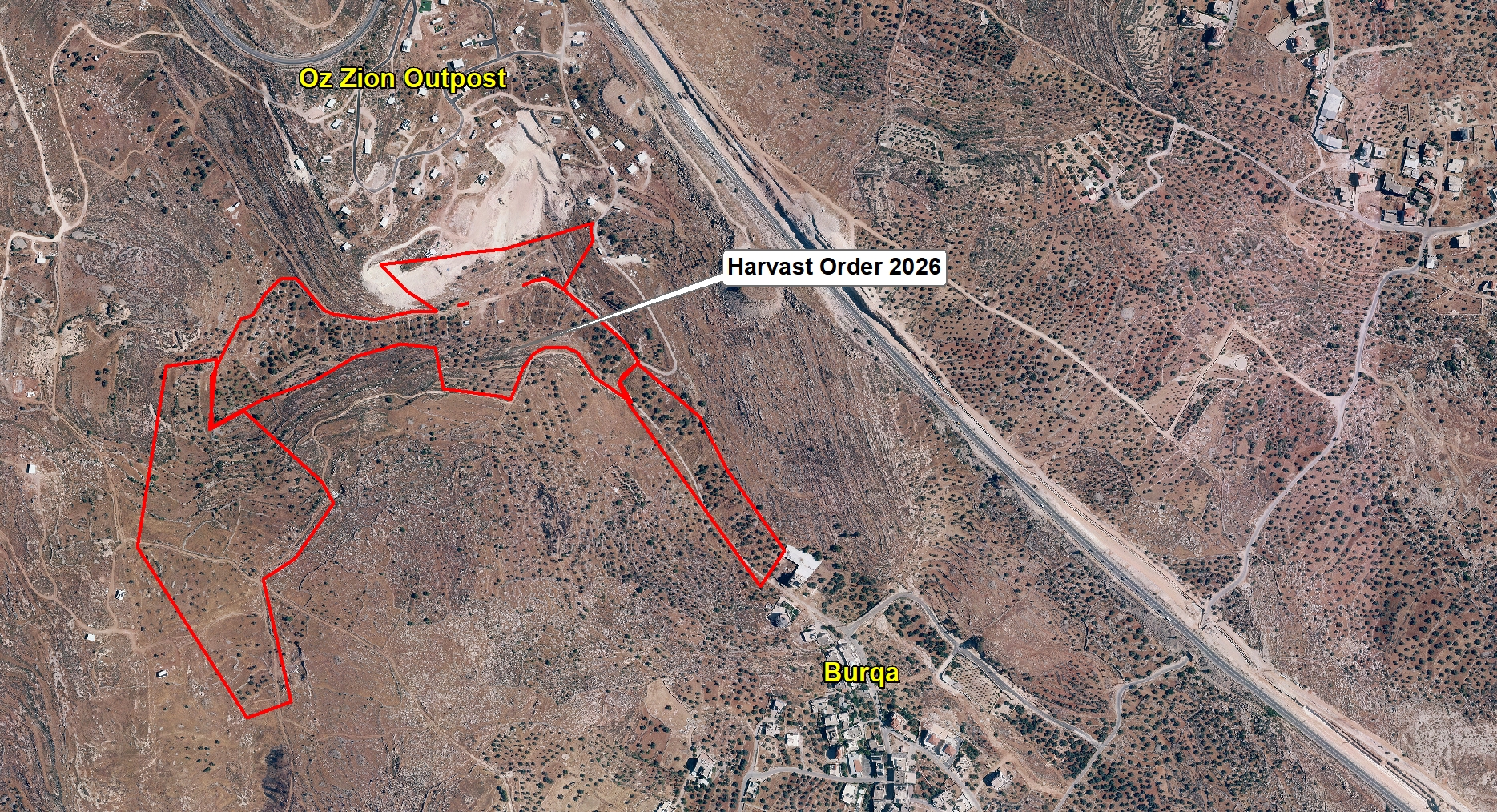
The new harvest order, of 2026, reduced by 85 dunams due to the outpost expansion